Diana Gordon · Product Designer & Builder
I design the human control layer of agentic AI in clinical software.
Nine years designing for clinicians and researchers at Mayo Clinic, Verana Health and Modernizing Medicine. I work in design and code, moving between them as the problem needs.
- Ran research with 45+ clinical research staff across three role-based panels
- Proposed how AI agents fit into the process of opening new clinical studies, and leadership approved it
- Two Mayo builds, a research data catalog and an agentic study startup tool, are in development from my prototypes
Interactive · Scripted simulation · Built in code with AI coding tools
A screening assistant, simulated live.
Watch it run. A scripted agent reads a synthetic clinical note and pulls out facts. Reversible ones go into the record on their own. Anything that can’t be undone stops and waits for a person.
Work where people stay in charge
Let the agents do the work. Keep people in charge.
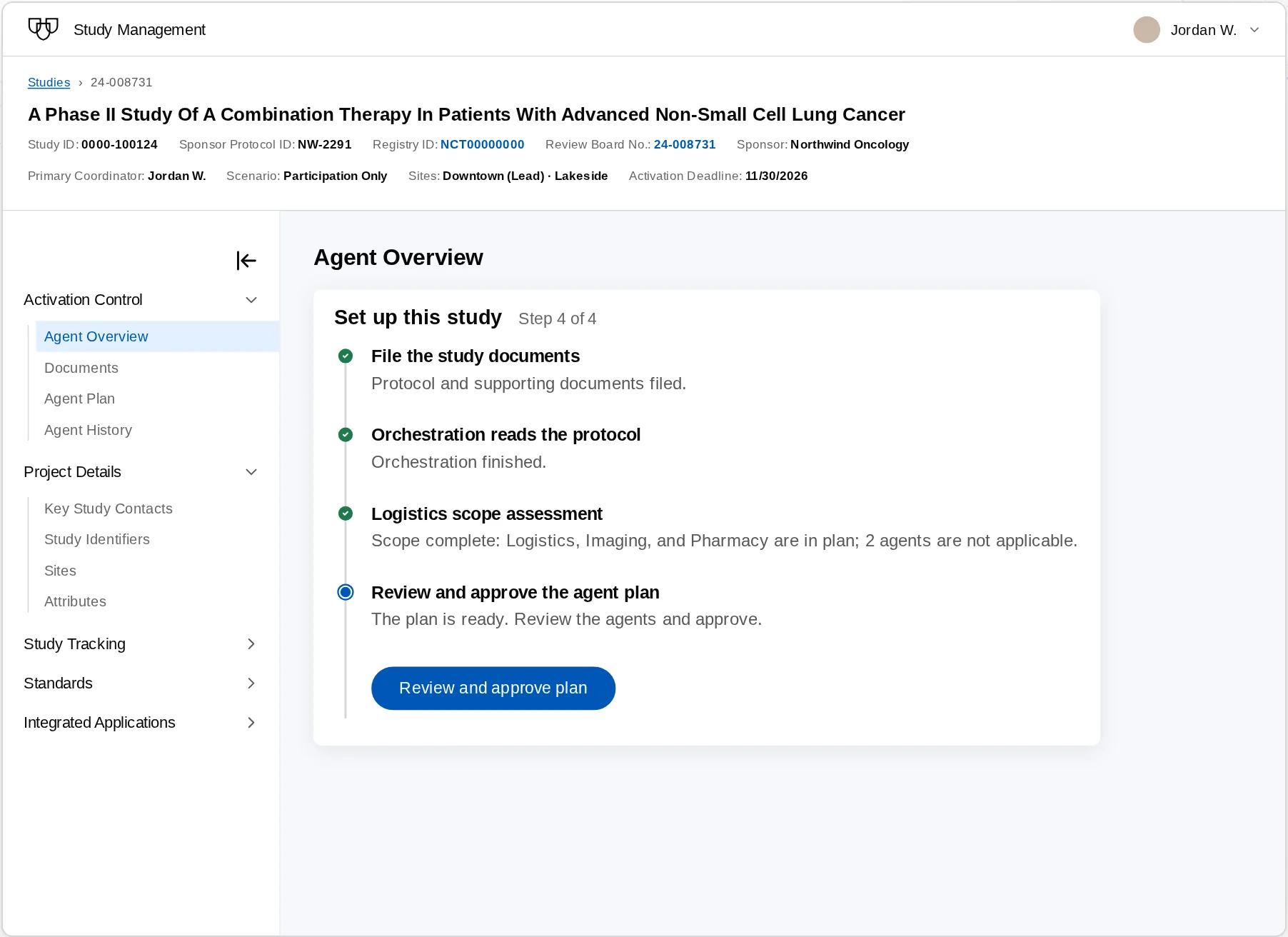
AI agents are planned to handle study startup paperwork across 10+ systems. I ran the research, proposed how the agents fit in, and designed how coordinators direct and check their work. Leadership approved the direction.
- Direction approved by leadership
- In build from my prototype
- 4.8/5 concept score for the study overview, the top-rated among 11 specialists
- Requirements written from my prototype
Getting decades of research data back within reach
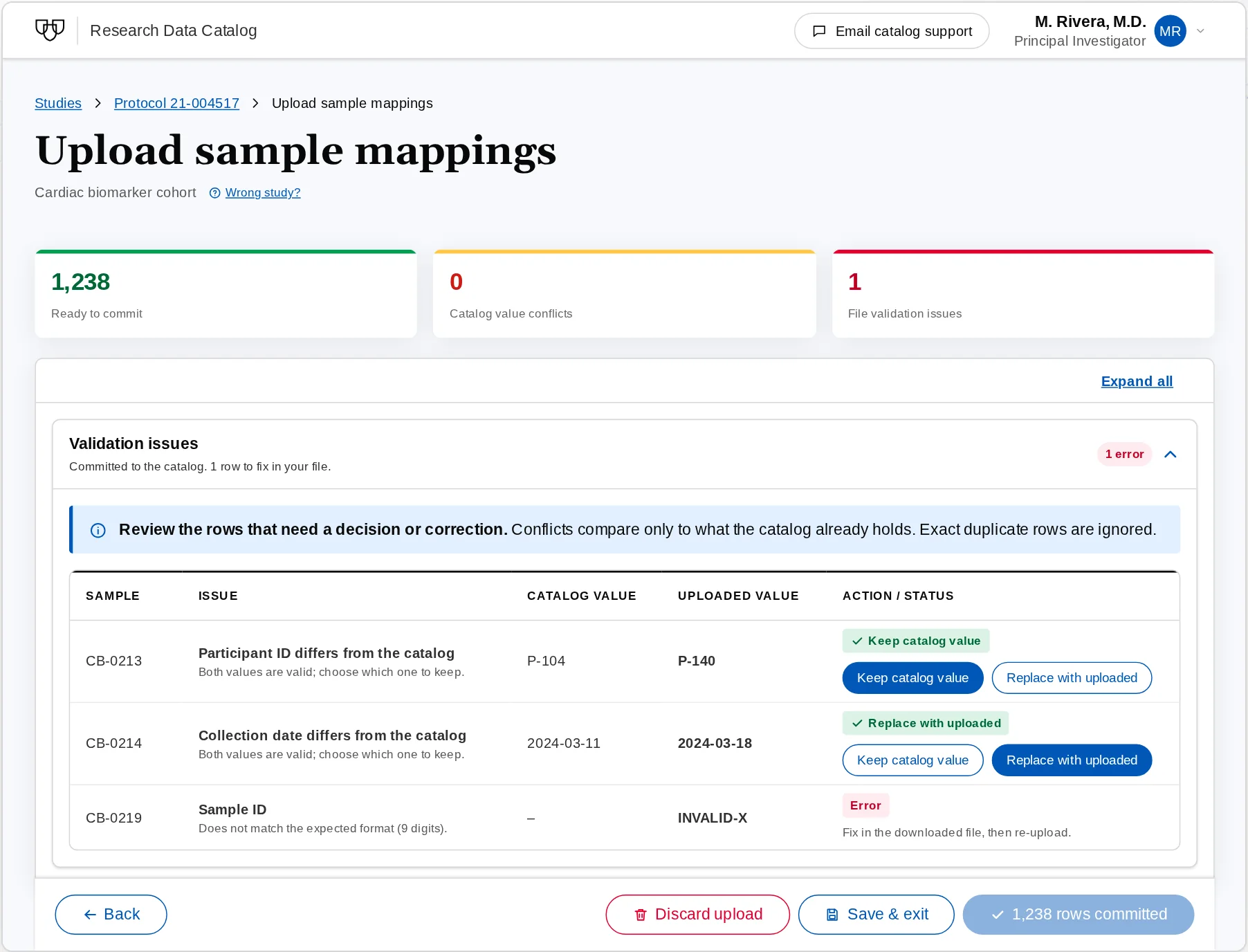
I built a working prototype of the MVP, and leadership approved the build after seeing it run. Now four developers build from my prototype, which will connect research teams and 25 core labs to one catalog.
- Build approved after the prototype demo, release 1 in development. AI mapping designed, not yet shipped
- 4 developers building from my prototype
- Conflict flow cut from four options to one question
- Held the line: nothing reaches the catalog without validation
A Medicare quality platform clinicians would recommend
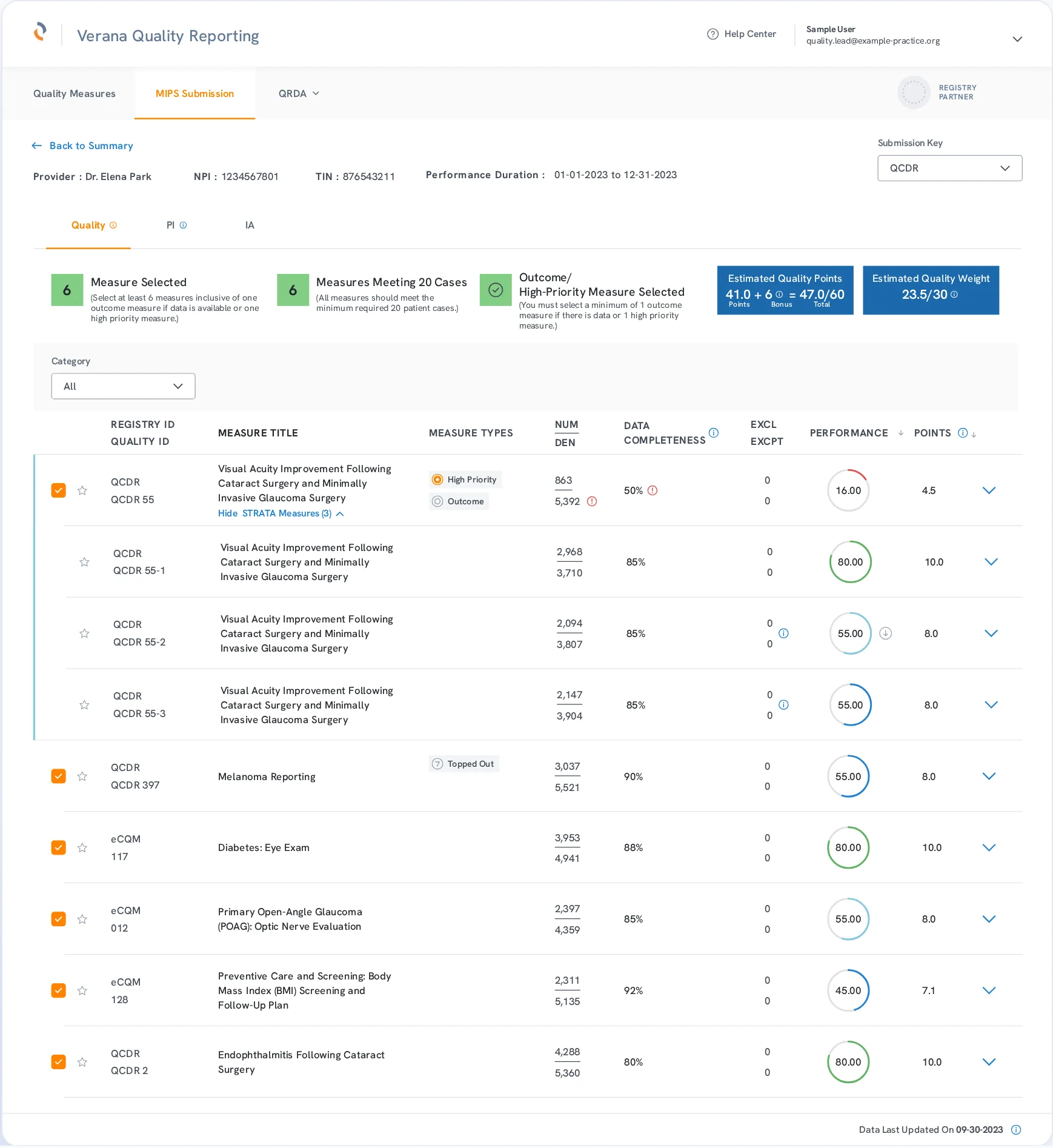
Reporting software that made a dense compliance workflow clear and trustworthy. Each rule sits next to the decision it affects, so clinicians stay in control of their own score.
- NPS of 90 from about 200 users surveyed after launch
- Used by nearly 3,000 clinicians across two specialty registries
- Shipped on time for a Medicare deadline
A crowded drug market, readable at a glance
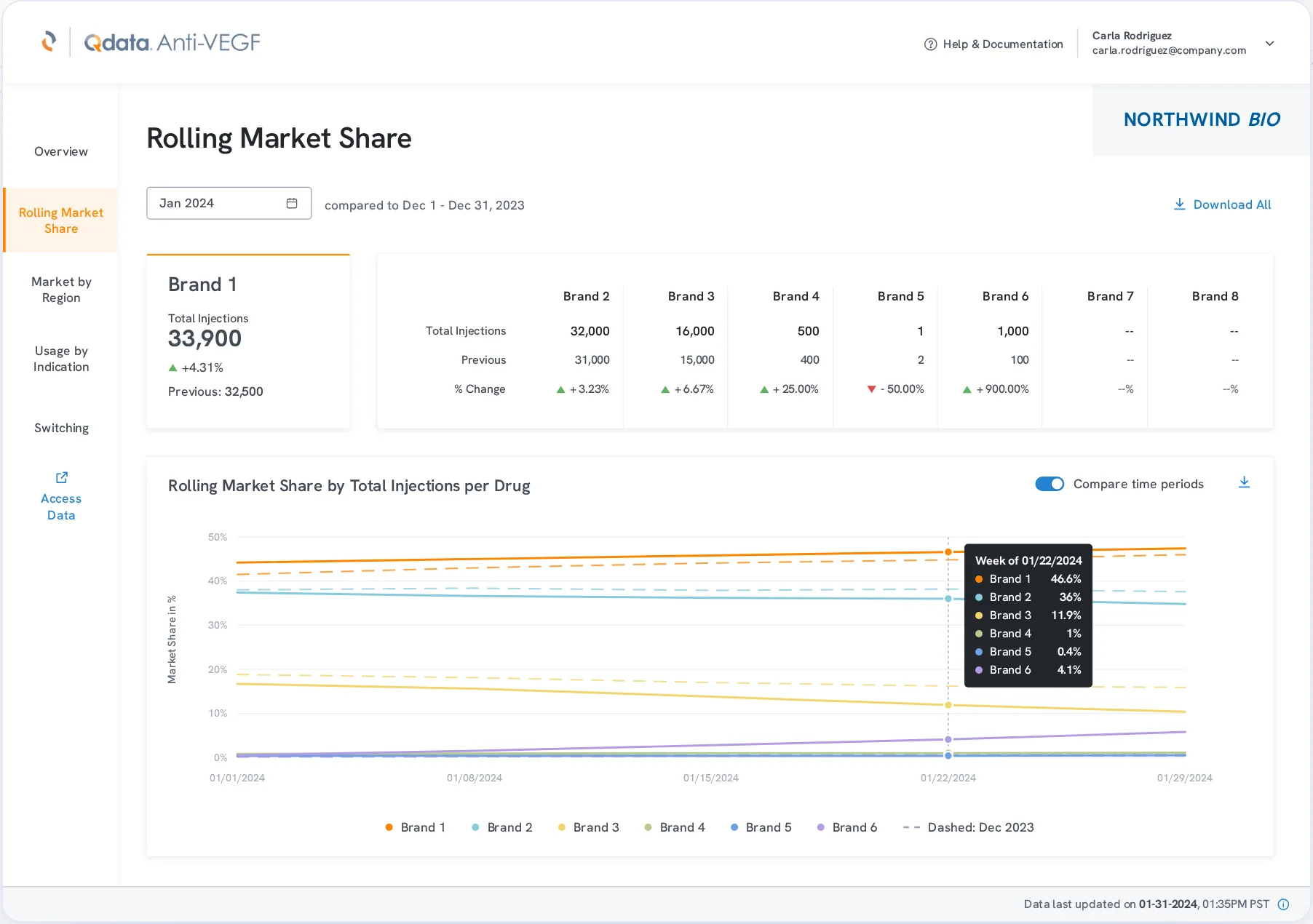
A 0-to-1 analytics product that shows pharmaceutical brand teams how retina drugs are being used, and how that is changing, month over month. Every number carries its comparison, so the people reading it make the call.
- A product sold at $1M+ per customer each year
- 2.7M+ patients and 7,300+ clinicians in the data
- Designed 0 to 1, through alpha and beta
More work, with outcomes
The developers came from legacy clinical systems with no design-system habits, so I kept research-backed documentation visible instead of arguing each decision. UAT validated the patterns they had doubted, and they became the team’s default. Shipped two months early and used by the whole pharmacy team (34 of 34).
Reframed an initiative stalled for two years around the people using it, then launched it in three months.
I led research and design from 0 to 1 for a marketplace connecting the EHR to third-party integrations. The revenue is the product’s annual figure.
I led research and design for the e-prescription module used by 9M monthly users, including the GoodRx and real-time benefits features. The savings figure is the product team’s estimate.
Co-led with the Director of UX and the Director of Patient Safety. We set the notification hierarchy used across every application and system.
Chart and motion studies
The data visualizations from my dashboards, pulled out and animated on their own.
Control That Means Something
A framework for human oversight of AI that acts on its own.
- 01BoundaryWhere the AI must stop and a person must act.
- 02ControlWhat a person can do about it: confirm, edit, pause, override.
- 03LegibilityMaking the AI’s reasoning something a person can check.
The tools behind the work
What I use to design, prototype, build, and ship.

Trained in human factors. Working in design and code.
I’m a product designer with nine years in regulated healthcare. At Mayo Clinic I design AI tools for clinical research, deciding what the AI does on its own and what stays with a person.
Before that I designed Medicare quality reporting, market analytics and trial recruitment tools at Verana Health, and EHR workflows at Modernizing Medicine, where I co-led the alerts and notification taskforce with the Director of UX and the Director of Patient Safety. It set the notification hierarchy used across every application. I prototype in code and test with the people who use the tools.
MS, Human Factors in Information Design, Bentley University. Based in Florida, working remotely on US Eastern time.
I contributed research, design critique and mockups to Modernizing Medicine teams that won two 2020 SaaS Awards (Best Healthcare SaaS, Best UX/UI) and the 2017 UX Awards People’s Choice.